
Category: Life Tapestries

  • Golden Hours: The Quiet Art of Ending Beautifully

    Golden Hours: The Quiet Art of Ending Beautifully

    Some days begin without promise.
    Days that feel heavy before they even truly start—when the morning light fails to inspire, and responsibility settles in like an uninvited weight. The hours are long, filled with noise, expectations, and quiet battles that test both patience and spirit.

    Yet, even on such days, there exists a gentle reassurance.

    The golden hour.

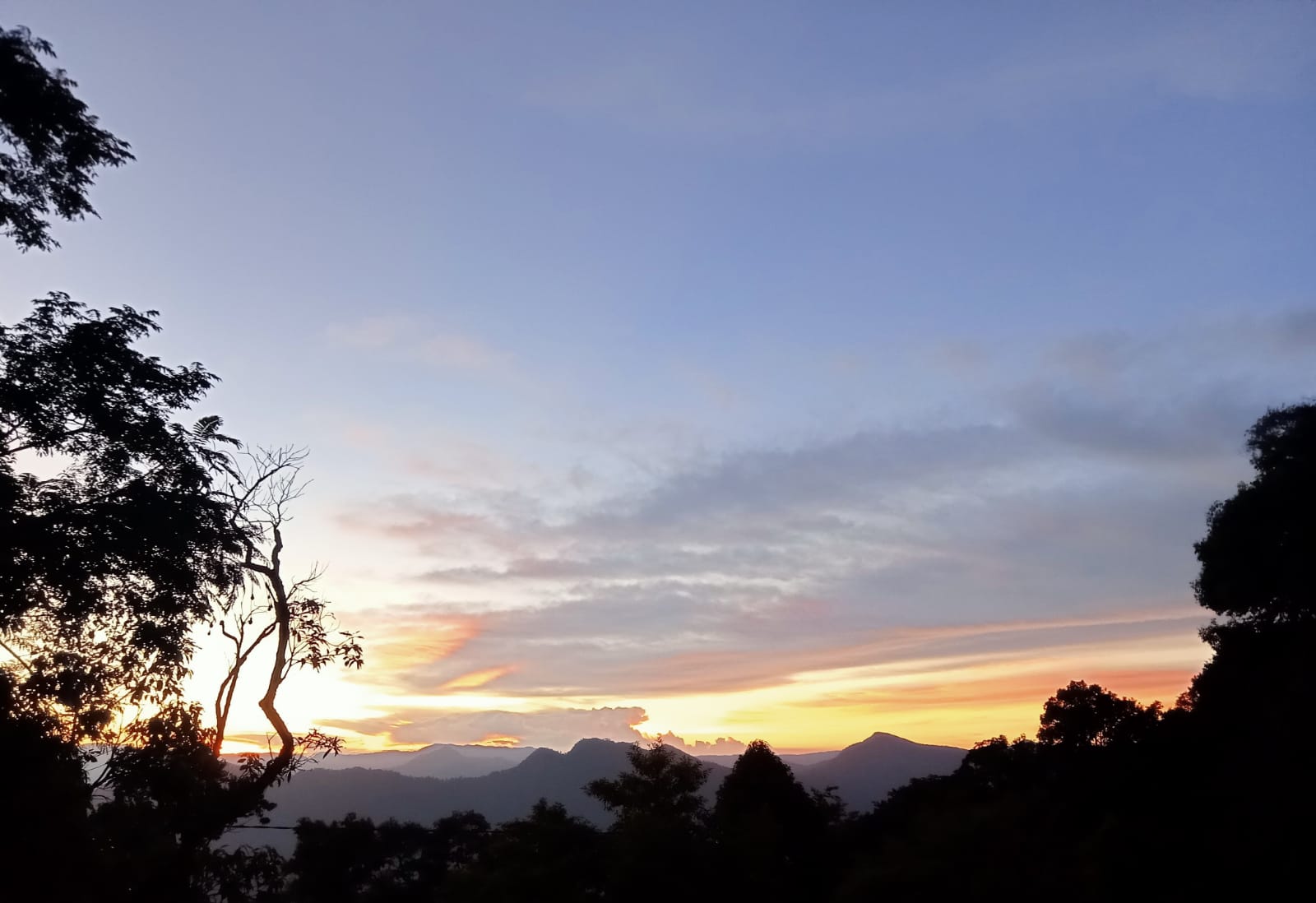
    That fleeting moment when the sky softens… when the sun dips low and spills warmth across everything it touches. The same world that felt overwhelming just hours ago suddenly appears kinder—painted in hues of amber, honey, and quiet fire.

    In that light, something shifts within us.

    It reminds us of a simple, profound truth:

    It is never too late to end the day beautifully.

    No matter how the story began, no matter how tangled the middle chapters may feel, the ending still holds possibility. A single moment—like the golden hour—can transform the entire narrative.

    Because we are, after all, the authors of our own stories.

    And every day, we write in fragments. Some pages are rushed. Some are messy. Some are filled with doubt. Yet, woven through them all are threads of color—moments of reflection, resilience, and quiet hope.

    Thread by thread, they form a tapestry.

    Something meaningful.
    Something deeply, unmistakably ours.

    Like a rainbow, our stories may resemble others from afar—familiar arcs of struggle and joy—but up close, they reveal patterns no one else can replicate. Every shade, every transition, every unexpected blend of light and shadow makes it uniquely personal.

    So even if the day begins without enthusiasm…
    Even if it feels like a chapter you’d rather skip…

    Pause when the light begins to change.

    Look up.

    Let the golden hour remind you that beauty does not belong only to perfect beginnings. It belongs just as much—perhaps even more—to graceful endings.

    And maybe, in that quiet glow, you’ll find the courage to close the chapter…

    Not as it started,
    but as something magnificent.

    What if every ending was your chance to rewrite the meaning of the whole day? Because every life, like a tapestry, is most beautiful in its finishing threads.
  • The Unfair Stage

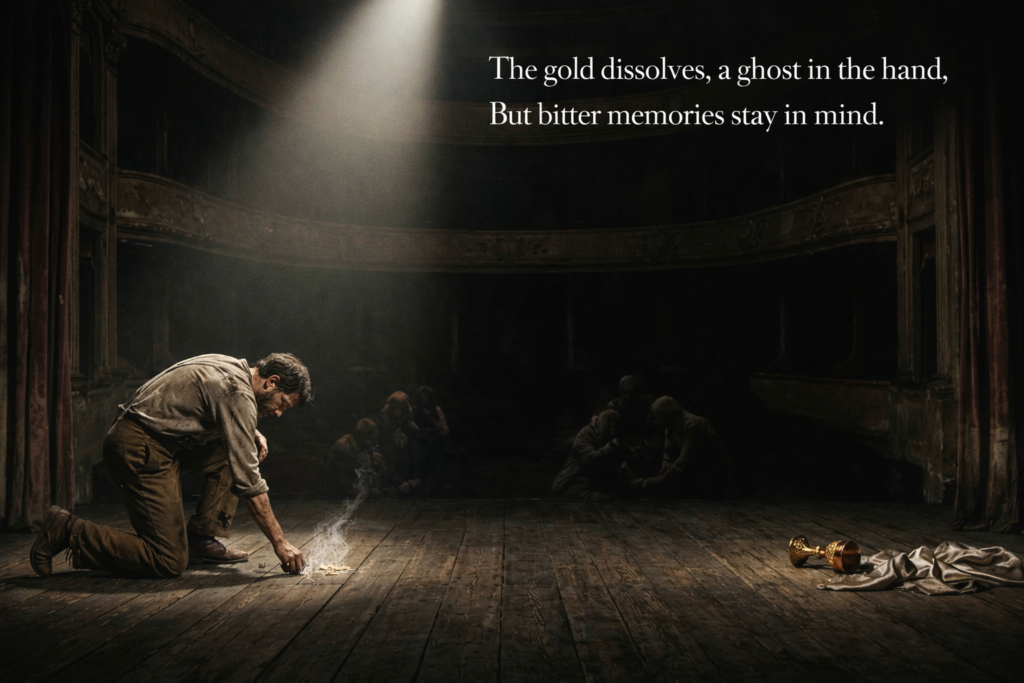
    A lonely, weary figure kneeling on a dark wooden theater stage in a spotlight, representing themes of human struggle and destiny.

    A meditation on the uneven tracks of toil and the ghosts of destiny.

    We rush each day from sun to sun,
    Toil for the fruit of a withered vine.
    We sweat to place food on the plate,
    And chase a dream that will not wait.
    It flies away like a bird in spring.
    The gold dissolves, a ghost in the hand
    But bitter memories stay in mind.

    Some glide on silk, through gardens bright and grand.
    But others move with weary pace,
    With little hope left in the race.
    They stumble, they rise, then vanish in rain,
    And walk through fields of silent pain.
    Some lose their strength and leave the way,
    While others find ease beneath the yoke.

    The wise man says, “It’s destiny,
    That life is how it’s meant to be.”
    But look at the stage—the lighting is skewed;
    The weak are subdued, the rich are anointed.
    When lantern flickers and hope feels far,
    The poorest bear the deepest scar.
    They sweat in the canyons where hope cannot reach.

    So who can say that life is fair,
    When some have jewels, some have dust?
    The stage is set, the parts are cast,
    But for the bent spine, the trials last.
    Look at the world and see the truth:
    Life can be harsh, and fate uncouth.

    Concluding Thought: If you feel your spine bending under the weight of the day, know that you are not alone on this stage. The light may be skewed, and the track may be rough, but there is dignity in the persistence. Keep moving at your own pace—because your story is still being written, regardless of what the critics say.

    Does ‘destiny’ feel like a fair judge to you, or is the stage as skewed as it seems? I’d love to hear your thoughts in the comments below.

  • The Pieces We Swallow: On Silence, Identity, and the Cost of Comfort

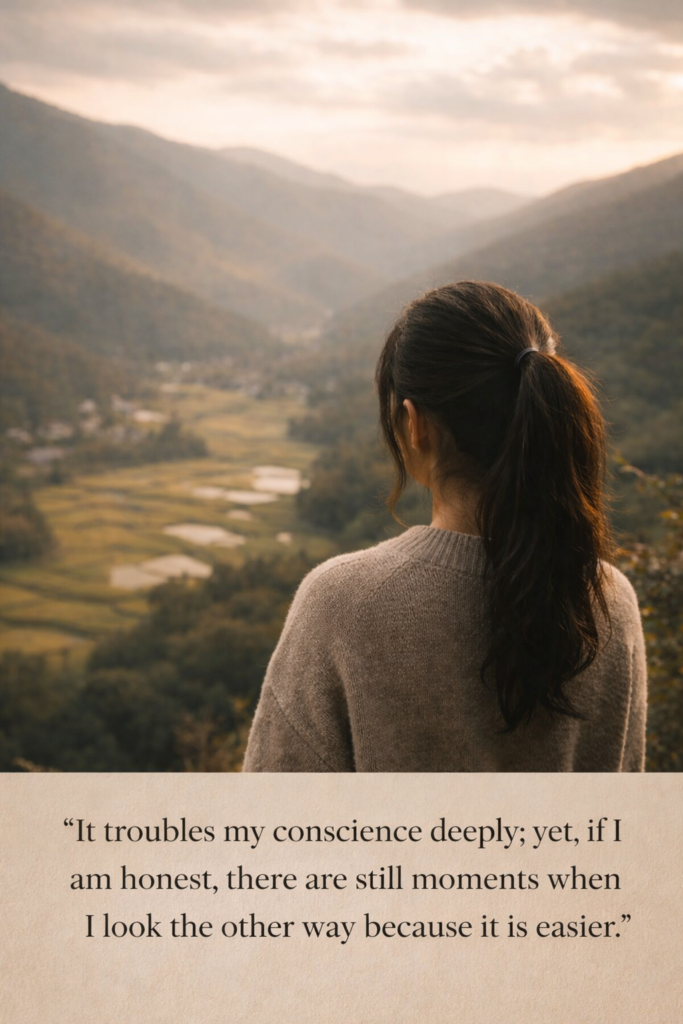
    A solitary figure gazes at a distant mountain landscape, representing the themes of introspection, conscience, and the struggle to face difficult truths

    We often imagine that losing our identity happens in a single, dramatic moment of theft. But more often, it fades quietly. It’s a slow erosion.

    It happens a little when we avoid conflict. A little more when we stay silent to protect a “family name.” It thins out when we convince ourselves, “This does not concern me.” Sometimes, our identity disappears simply because we are so absorbed in our own comforts that we fail to notice the battles others are fighting right beside us.

    Misconceptions grow in the hollow spaces where truth is never spoken. In those gaps, silence begins to look like agreement, and avoidance slowly turns into acceptance.

    The Weight of a Single Moment

    I still remember a specific afternoon from five or six years ago. I was part of a casual conversation about my home state and how the people there respond to the government. In the middle of the discussion, a person in a position of authority made a bold, sweeping claim:

    “Those who stand on the frontline and protest were actually drunk,” he said. “They would never have the courage to do it if they were sober.”

    He was referring to the Historic Protest of 15 July 2004 in Manipur. I was stunned.

    What unsettled me more than his ignorance was how easily others joined in. They nodded, agreeing that people from my state only react when they are bought with money or driven by drink. They spoke of us as people who are easily swayed, easily convinced, and lacking in true conviction.

    I was the only person from my state in that room. And yet, I remained silent.

    I think of that moment often. It shows how quickly a false narrative can take root when it is planted by those who have never truly stepped inside our world, let alone tried to understand the complexities of our reality.

    The Shadow of Our Virtues

    At the same time, I cannot ignore the difficult truths within our own society.

    My people are known for being peace-loving, hospitable, and generous. These are beautiful qualities worth preserving. But there is a shadow side to these virtues: they can lead us to compromise our conscience when short-term benefits are placed before us.

    Respecting our elders and leaders is a cornerstone of our strength, but I wonder if we have sometimes let that respect silence our own moral compass. Perhaps we were taught too strictly that we must always defer to the powerful or the wealthy. We were raised to believe that questioning them is a form of disrespect. For many of us, it feels almost unnatural to challenge someone openly, especially outside the walls of our own homes.

    Whether it stems from cultural expectations, social structures, or religious teachings, we are trained to maintain a “good impression” at all costs. Sometimes, looking “kind” matters more to us than doing what is right.

    The Modern Contradiction

    In a world that constantly glorifies wealth and status, many of us—including myself—have gradually shifted our focus toward comfort and outward success. In this pursuit, we sometimes overlook the simple blessings that once defined us: food from our own land, clean water, fresh air, and the life we were given.

    Slowly, almost without noticing, we learn to swallow pieces of our pride. We trade our identity for convenience. It troubles my conscience deeply; yet, if I am honest, there are still moments when I look the other way because it is easier.

    Perhaps this tension is simply part of being human—living in the gap between what we believe is right and what feels safe to accept.

    A Question for the Reader

    Identity is rarely taken from us by force. More often, little by little, we surrender it ourselves.

    • Have you ever stayed silent when you knew you should have spoken?
    • Have you felt your identity quietly bending under the weight of expectations or comfort?

    The silence we keep today becomes the cage we live in tomorrow.